
Wholesale Italian Cured Meats for Delis and Restaurants: Range and Pack Sizes
Buying wholesale Italian cured meats comes down to three calls. Which family each menu or counter needs, whether to buy whole for slicing or pre-sliced for speed, and which pack size your turnover finishes before the cut face tires. Get those right and your counter looks fresh, your margin holds, and nothing dries out on the board.
Whole muscle cut to order gives the best margin and the freshest face, but it needs a slicer, the skill to use it and the throughput to justify it. Pre-sliced packs cost more per kilo and save labour where you slice little or need a consistent portion. Most delis run a mix: whole legs and salami on the counter, sliced packs behind for sandwiches and quick service.
Quick overview: nine things to get right before you order
What Italian cured meats does a deli or kitchen need?
A deli or kitchen needs cover across four families, each behaving differently on the counter and the plate. Whole-muscle cuts are salted and air-dried pieces you slice to order. Salami are cured, seasoned sausages for slicing and boards. Cooked meats move fast in sandwiches and on pizza. 'Nduja is the spreadable Calabrian outlier that adds heat. Stock a strong line or two in each family before you chase specialities.
The table below sets out how each family earns its place, and what to watch on pack format and shelf life.
Whole-muscle cuts: the counter anchors
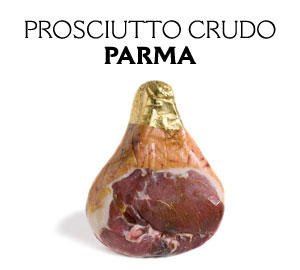
Whole-muscle cuts are the pieces customers recognise and pay a premium for. A whole Prosciutto di Parma DOP leg on the stand tells buyers you slice fresh, and it carries the best margin per kilo if you get through it. Bresaola, coppa, speck, pancetta and guanciale fill out the range, from lean air-dried beef to the fattier cuts a kitchen renders down. All of them keep well whole and lose condition fast once the face is open, so buy the size your counter finishes.
Salami: slicing, boards and pizza
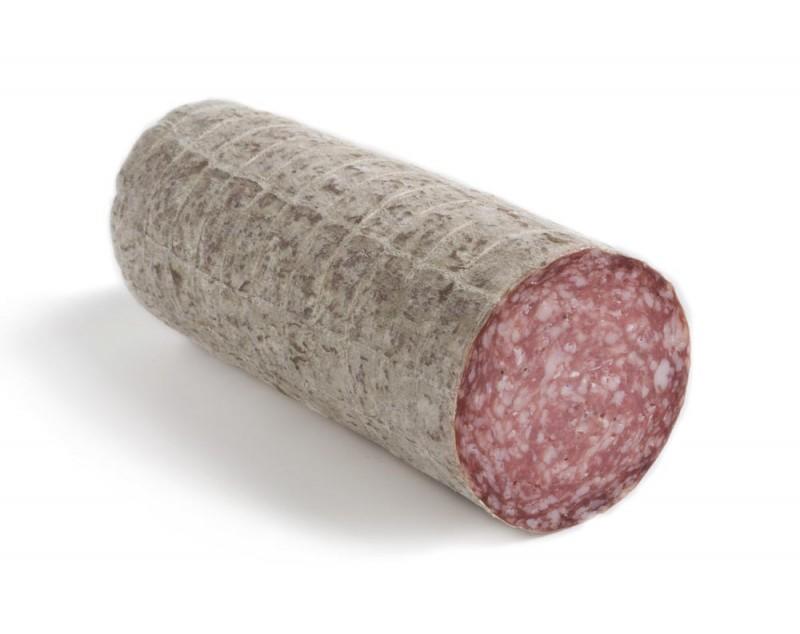
Salami give a deli its board and a pizzeria its topping. Milano and Napoli are the everyday slicers, finocchiona brings fennel, ventricina and soppressata bring heat and character. Buy whole sticks where you slice to order and have the turnover, and sliced packs where speed matters more than the show. A whole stick keeps drying and holds for weeks, while a cut face is best used within a few days.
Cooked meats: fast movers for sandwiches
Cooked meats are the volume lines. Mortadella Suprema 800g and the wider mortadella range move quickly on pizza, in panini and cubed for aperitivo, and prosciutto cotto and porchetta fill the sandwich counter. These are chilled, shorter-life products, so size them to weekly usage and rotate hard. They reward frequent, smaller orders over a big buy that sits.
'Nduja: heat across the menu
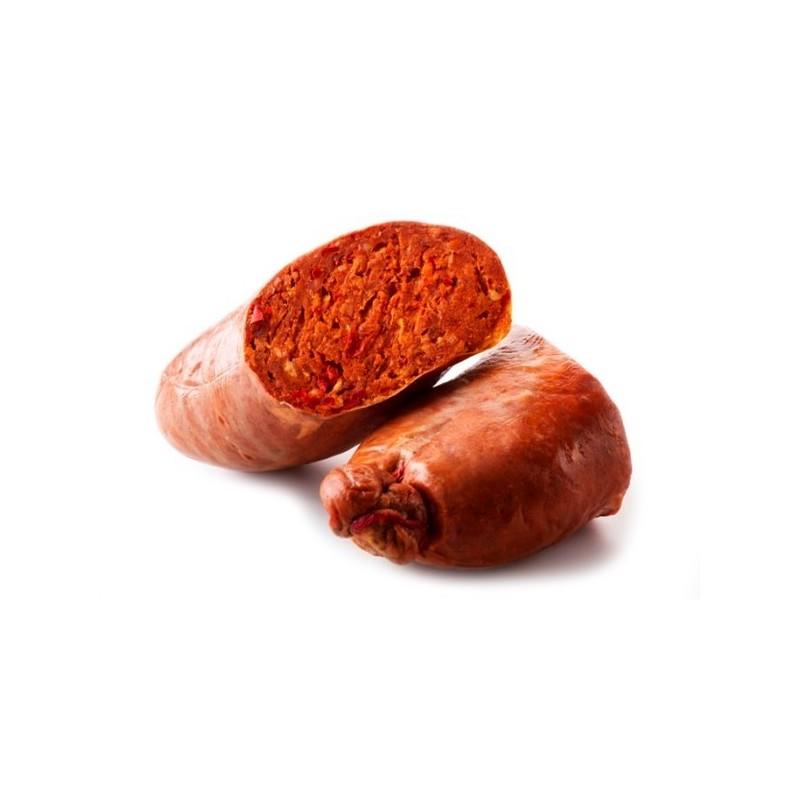
'Nduja is the spreadable Calabrian salame that adds heat to a whole menu. A little melts through a pizza, loosens into a pasta sauce or spreads on bruschetta, so 'nduja earns its place in a kitchen well beyond an antipasti board. Sealed, it keeps for a long time, which makes it an easy standing line to hold.

Should you buy cured meat whole or pre-sliced?
Buy whole where you can slice to order, and sliced where you cannot. Whole muscle gives the best cost per kilo, the freshest cut face and the counter theatre that sells the premium, and it suits a deli with a slicer, the skill to use it and steady throughput. Pre-sliced packs cost more per kilo but save labour, give a consistent portion and cut waste where you slice little or serve at pace.
The honest test is turnover. A whole Parma leg or salami stick is cheaper per kilo only if you finish it in good condition. If it would dry on the counter for weeks, a smaller piece or a sliced pack is cheaper in practice. Most delis land on a mix, whole for the counter and the margin, sliced behind for sandwiches and service.
How do pack sizes change your cured meat order?
Pack size decides whether meat arrives fresh, holds condition and costs what you expect per portion. A whole Prosciutto di Parma leg suits a busy counter that slices all day, while a smaller piece suits a kitchen that uses less. Mortadella comes as an 800g piece, a half or a whole, so you can match it to how fast the sandwiches sell. 'Nduja in a 500g piece or jar holds as a standing line without waste.
Cooked meats punish overbuying fastest, so order them small and often. Whole cured muscle is more forgiving but ties up cash and counter space. The right pack is always the one your covers finish before the meat tires, not the biggest on the list.
How long do Italian cured meats keep?
Whole cured meats keep for weeks, and sometimes months, when they are wrapped and stored well, because the salt and the drying protect them. The clock speeds up the moment you cut. A whole Parma leg or a salami stick holds for a long time, but the exposed cut face dries and oxidises within days, so protect it and work through it. Cooked meats like mortadella and prosciutto cotto have a shorter chilled life again and should move within days of cutting. Sealed 'nduja keeps for a long time and should be used up once opened.
Storage does the rest. Keep whole legs and sticks cool and covered, wrap the cut face against the air, hold cooked meats chilled, and rotate everything first in, first out. Buy to a turnover that keeps the face fresh rather than to a shelf life you are unlikely to reach.
How should a deli present cured meats on the counter?
Present cured meats to show freshness and origin, because the counter sells the premium before the price does. Stand a whole leg on a ham cradle and slice to order so buyers see a fresh face. Keep salami on a board or hung within a chilled counter, sliced thin to order. Cover every cut face when it is not in use so it does not dry, and rotate so the oldest piece is always the next one cut.
Labelling earns its keep here. Naming Prosciutto di Parma DOP, the region behind a salami or the story of a 'nduja gives customers a reason to trade up. A tidy, well-rotated counter with clear origin sells more high-margin meat than a crowded one that looks tired.
Trade cured meat baskets by business type
Different businesses need different core meats. These starting baskets group the lines that reorder together, so you can build an order around how you serve.
Deli counter
Use case: counter display, slicing to order and retail sales.
Order focus: a whole Prosciutto di Parma DOP leg, a couple of salami sticks (Milano and a spiced option), bresaola and coppa for range, plus mortadella and 'nduja.
Trade judgement: buy whole where you slice to order and have the turnover, and keep the counter rotated so the premium legs stay fresh.
Pizzeria
Use case: toppings and a small antipasti offer.
Order focus: 'nduja for heat, a spicy salame or ventricina for pizza, mortadella for a finished pizza or aperitivo, plus prosciutto crudo for a fresh-topped line.
Trade judgement: hold 'nduja and one spicy salame as standing lines, and buy crudo in a size the menu actually gets through.
Italian restaurant or sandwich counter
Use case: antipasti boards, panini and platters.
Order focus: mortadella and prosciutto cotto for sandwiches, prosciutto crudo and bresaola for boards, salami for slicing, and guanciale or pancetta for the kitchen.
Trade judgement: split whole and sliced by how each line is used, whole for the board, sliced for the fast sandwich lines.
How should you plan your first serious cured meat order?
Plan the first order around one week of real service, then adjust from what you actually use. Overbuying tires the counter and underbuying leaves gaps mid-week, so treat the first order as a measured test.
What should you ask a cured meat supplier before you commit?
Ask the questions that tell you whether reordering will be reliable, because a wholesale relationship lives on the repeat.
→What pack formats does each meat come in, whole and sliced?
→What is the shelf life on arrival for the cooked and sliced lines?
→Which meats carry a DOP or IGP, and can you confirm the origin?
→How is chilled meat delivered, and how far ahead do I order?
→Can I set standing orders for my core lines and adjust specials each week?
→What happens if a line is short or a delivery slips?
A supplier who answers those plainly is one you can build a counter around. Trade Account Benefits covers how pricing and repeat ordering work once you open an account.
Common mistakes when buying Italian cured meats wholesale
01. Buying a whole leg you cannot finish. A drying, half-used leg costs more than a smaller piece you use fully.
02. Over-ordering sliced and cooked lines. These tire fastest, so order them small and often.
03. Judging on price per kilo alone. A cheaper meat that tires on the counter loses more in waste and appearance than it saves.
04. Leaving cut faces open. An unprotected face dries and oxidises within a day.
05. No fixed reorder day. Ad-hoc ordering means cooked lines arrive at uneven dates and rotate badly.
06. Ignoring origin on the label. DOP and IGP names sell the premium, and customers ask.
07. One meat trying to do every job. A lean bresaola and a fatty guanciale are not interchangeable. Stock the family.
08. No slicing skill or kit behind a whole-meat plan. Whole muscle only pays back if you can cut it well and fast.
How to review your cured meat counter each month
Review the counter the same way each month, because a short, repeatable check catches waste and drift before they cost you.
What sold well? Note the meats tied to your best sellers and protect those lines in the order.
What tired or was wasted? Flag any piece that dried or hit its date before you used it, and cut the pack size or frequency.
What caused ordering friction? Look for lines you ran short on or reordered off-cycle, and fix the cadence.
What should change next order? Adjust one or two pack sizes or the whole-to-sliced split from what the month showed.
Your Italian cured meat buying checklist
✓Every meat on the order maps to a menu line or counter role.
✓Whole for slicing and margin, sliced for speed and consistency.
✓Pack size matched to weekly throughput, so meat finishes in condition.
✓Cut faces protected and stock rotated first in, first out.
✓Origin and DOP or IGP confirmed where it sells the premium.
✓A fixed reorder day and standing orders for core lines.
✓A trade account in place for pack sizes and repeat pricing.
Related reading
Open an Italian food trade account with A Di Maria & Son
Family-run Italian food & wine wholesaler since 1975, supplying delis, Italian restaurants, pizzerias and sandwich counters with fast nationwide delivery. We hold the whole-muscle cuts, salami, cooked meats and 'nduja a counter and kitchen reorder week to week, whole or sliced, in the pack sizes that match real service.
Apply for a trade account to set your pricing and pack sizes for repeat ordering. Call 02476 680 514 or email contact@adimaria.co.uk with your counter setup, slicer and weekly usage, and we will help you build a cured meat order around how you actually serve.
FAQs
What are the main types of Italian cured meat?
Whole-muscle cuts such as Prosciutto di Parma and bresaola, salami such as Milano and finocchiona, cooked meats such as mortadella, and spreadable 'nduja. Each behaves differently on the counter and the plate.
Should a deli buy cured meat whole or sliced?
Whole where you slice to order and have the turnover, for the best margin and the freshest face. Sliced where you slice little or need speed and a consistent portion. Most delis run both.
How long does sliced cured meat last?
Sliced cured meat tires within days, because the cut surface dries and oxidises. Whole pieces keep for weeks when wrapped and stored well, which is why slicing to order stays fresher.
Is Prosciutto di Parma the same as prosciutto crudo?
Prosciutto crudo means air-dried raw ham in general. Prosciutto di Parma DOP is a specific protected ham from Parma, and the DOP name is worth showing on the counter.
How do I store cured meat in a deli counter?
Keep whole legs and salami cool and covered, wrap every cut face against the air, hold cooked meats chilled, and rotate first in, first out. Buy to a turnover that keeps the face fresh.
Can I order Italian cured meats in trade pack sizes?
Yes. Whole legs, salami sticks, cooked lines and 'nduja come in trade formats, whole or sliced, so you can match each to your throughput on a trade account.
Tell us your business type, counter setup, slicing kit and weekly usage, and we will help you build a practical Italian cured meat order around real demand. Start narrow, prove demand, then expand from evidence.

