
Guanciale and the Real Carbonara: Sourcing and Using Italian Cured Cheek
Guanciale is cured pork cheek, and it is the authentic fat behind carbonara, amatriciana and gricia. It is fattier and richer than pancetta, and the fat it renders is what makes those Roman pastas silky. A real carbonara is guanciale, egg, Pecorino Romano and black pepper, with no cream and no garlic. For a kitchen, guanciale is a high-impact line that costs little per portion, because a small amount renders a lot of flavour.
Buy it whole and portion it yourself, so you control the cut and the yield. Pancetta will stand in when you have to, but for the Roman classics guanciale is the real thing, and sourcing it from an Italian wholesaler is straightforward on a trade account.
Quick overview: guanciale at a glance
What is guanciale?
Guanciale is pork cheek, or jowl, cured with salt and pepper and air-dried for a few weeks to a few months. The name comes from "guancia", the Italian for cheek. It is not smoked in the traditional style, and it carries far more fat than most cured meats, with a deep, savoury pork flavour and a peppery edge from the cure. That fat is the whole point. Cooked slowly, it renders into a silky base that coats pasta in a way a leaner meat cannot.
Guanciale vs pancetta: which should a kitchen use?
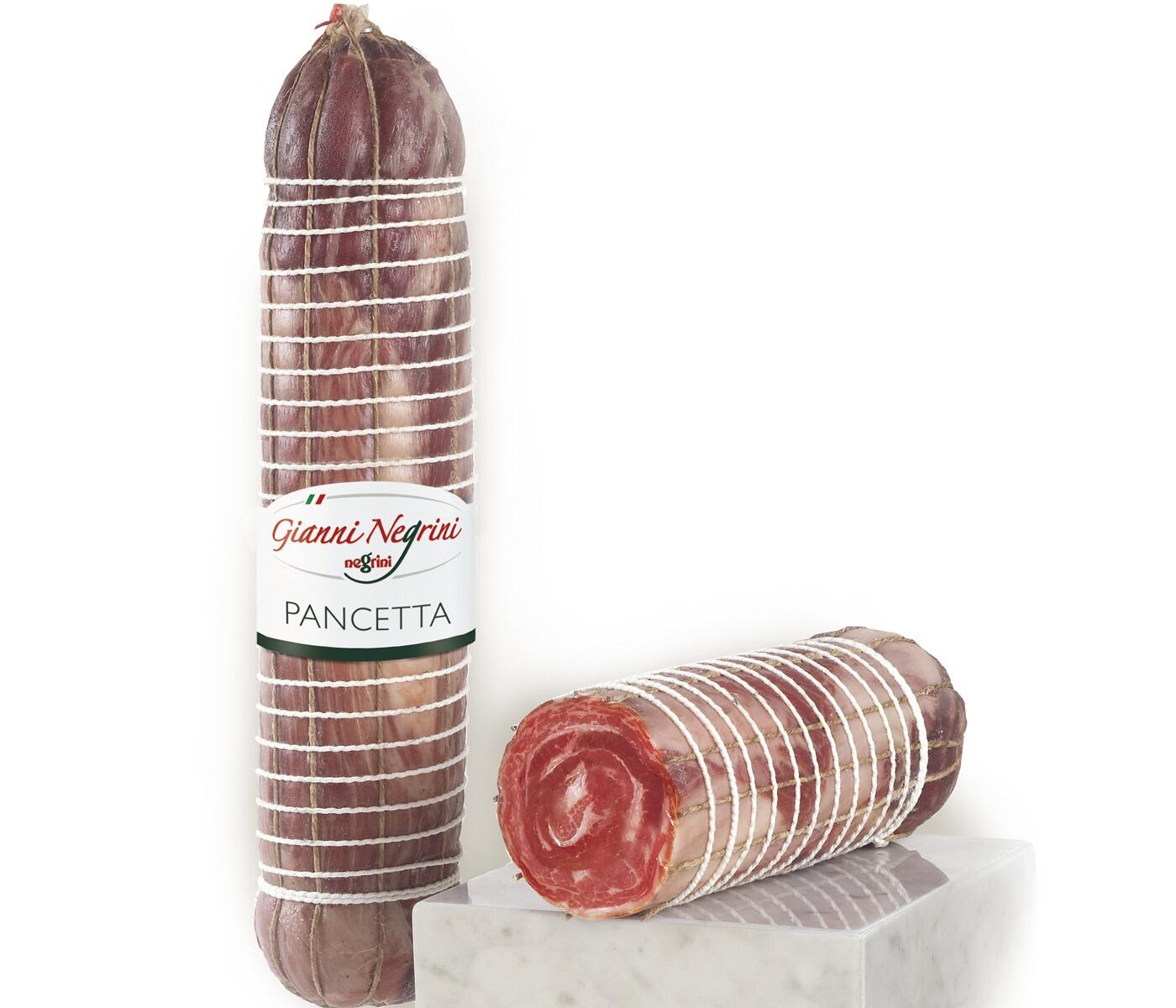
For the Roman pasta classics, guanciale beats pancetta, because the cheek carries more fat and renders into a richer, silkier sauce. Pancetta is cured pork belly, leaner and meatier, so it works as a substitute but gives a lighter, less silky result. Bacon is a further step away, usually smoked, and turns the dish into something else. If you are cooking carbonara, amatriciana or gricia properly, guanciale is the authentic and the better choice. The table below sets the three side by side.
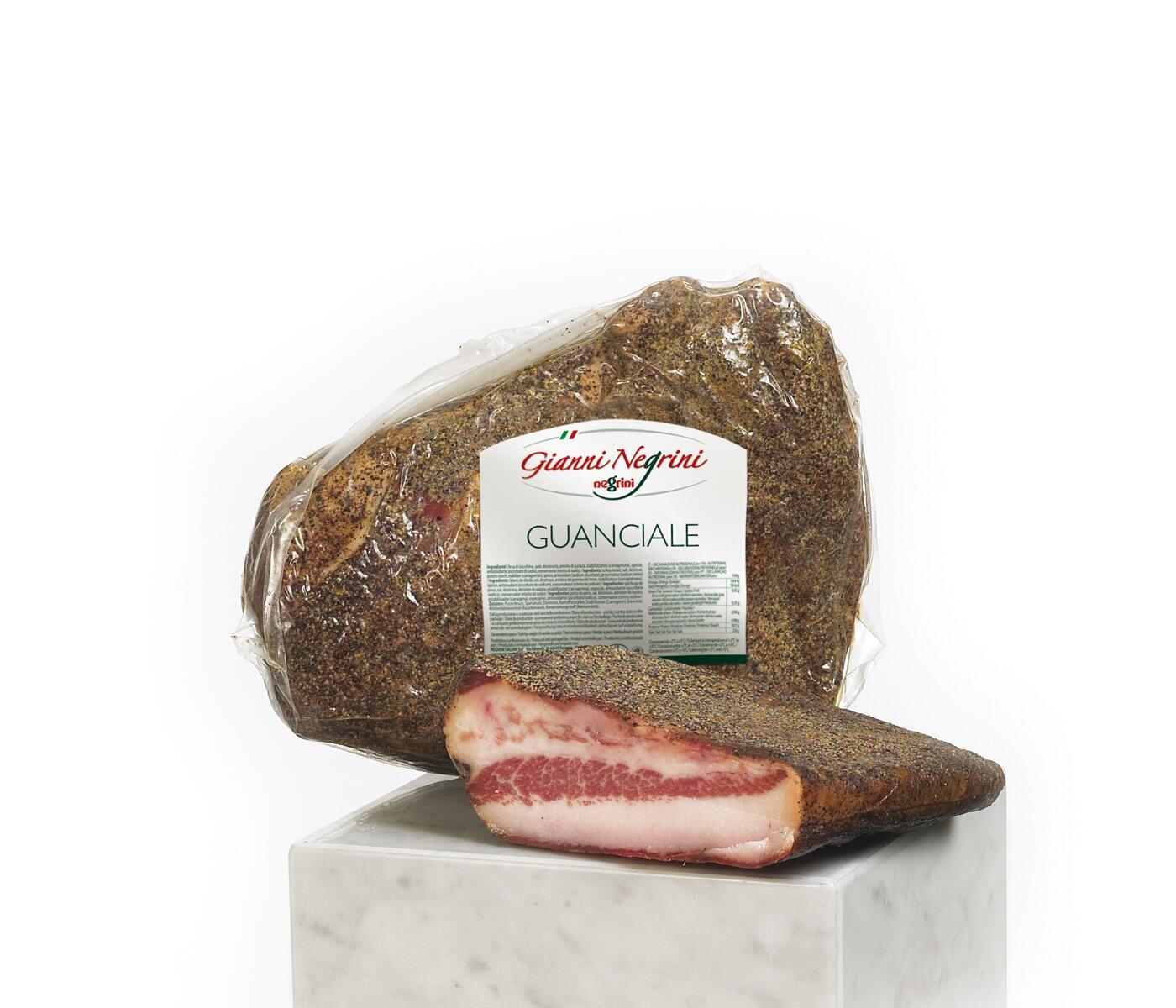
Guanciale 200g
Cured pork jowl from Gianni Negrini. Rind off, cut into batons, rendered slow. This is the fat that makes a carbonara.
What makes a real carbonara?
A real carbonara is guanciale, egg, Pecorino Romano and black pepper, tossed through pasta with a little of its starchy cooking water. There is no cream, no garlic and no onion in the Roman original. The method matters as much as the ingredients: render the guanciale slowly to release its fat and crisp the meat, cook the pasta, then combine the pasta with the egg and cheese off the heat so the egg thickens into a glossy sauce rather than scrambling. Some kitchens use a mix of Pecorino Romano and Parmigiano, and spaghetti or rigatoni both work. The rendered guanciale fat is what carries the dish, so it is worth using the real cheek.
Amatriciana and gricia: the other guanciale pastas
Guanciale carries two more Roman classics beyond carbonara. Amatriciana is guanciale, tomato, Pecorino Romano and a little chilli, tossed through bucatini or spaghetti, and it comes from the town of Amatrice. Gricia is the older, simpler dish, guanciale, Pecorino Romano and black pepper with no tomato and no egg, sometimes called a white amatriciana or the ancestor of carbonara. Between the three, one whole guanciale earns its place across a good part of a Roman pasta menu, which makes it easy to justify on the order.
How do kitchens portion and cook guanciale?
Portion guanciale by removing the rind and cutting the piece into strips or cubes, then render it slowly. Take off the hard rind first, then cut batons or lardons around a centimetre thick so the fat renders evenly. Start it in a cold or barely warm pan with no oil, since it releases plenty of its own fat, and let it go slowly until the meat crisps and the fat runs clear. Use that fat as the base of the dish. Because it is so rich, a small amount per portion is enough, which keeps the cost per plate low. Whole guanciale keeps for weeks chilled, so wrap the cut face, store it cool and cut to order.
Pecorino Romano is the natural partner across these dishes, so it is worth ordering the Pecorino Romano alongside the guanciale to cook them properly.

Common mistakes when cooking with guanciale
01. Adding oil to the pan. Guanciale renders its own fat, so it needs none.
02. Using bacon and calling it carbonara. The smoke changes the dish entirely.
03. Adding cream or garlic. A real carbonara has neither.
04. Rendering too fast. High heat burns the meat before the fat runs. Go slow.
05. Over-portioning. Guanciale is rich, so a little per plate is plenty and keeps the cost down.
Your guanciale checklist
✓Bought whole and authentic, then portioned in-house.
✓Rind removed and cut into even strips or cubes.
✓Rendered slowly with no added oil, and the fat used as the base.
✓Portioned small, because a little carries the dish.
✓Cut face wrapped and the piece stored cool between services.
✓Pecorino Romano ordered alongside for carbonara, amatriciana and gricia.
Related reading
Open an Italian food trade account with A Di Maria & Son
Family-run Italian food & wine wholesaler since 1975, supplying Italian restaurants, pizzerias and delis with fast nationwide delivery. We supply authentic Italian guanciale and the wider Wholesale Italian Meats & Salumi range, so you can cook the Roman classics with the real cheek rather than a substitute.
Apply for a trade account to set your pricing and pack sizes for repeat ordering. Call 02476 680 514 or email contact@adimaria.co.uk with the dishes you run and how much guanciale you get through, and we will help you size the order.
FAQs
What is guanciale?
Guanciale is cured pork cheek, salted and peppered and air-dried. It is fattier and richer than most cured meats, and its rendered fat is what makes Roman pastas silky.
Is guanciale the same as pancetta?
No. Guanciale is cured pork cheek and pancetta is cured pork belly. Guanciale carries more fat and gives a richer, silkier result in the Roman pasta classics.
Can you use pancetta instead of guanciale?
Yes, as a substitute, but it is leaner and less silky. For an authentic carbonara, amatriciana or gricia, guanciale is the real thing. Bacon is a smoky last resort.
Does real carbonara have cream?
No. A real carbonara is guanciale, egg, Pecorino Romano and black pepper, bound with a little pasta water. The egg and cheese make it creamy without any cream.
How do you cook guanciale?
Remove the rind, cut it into strips or cubes, and render it slowly in a dry pan with no oil until the fat runs and the meat crisps. Use that fat as the base of the dish.
Where can I buy guanciale in the UK?
From a specialist Italian wholesaler. A Di Maria & Son supplies authentic Italian guanciale in trade formats with fast nationwide delivery, so kitchens across the UK can cook the Roman classics properly.

