
The Caputo Flour Range Explained: Blue, Red, Nuvola and Pizzeria
The Caputo range comes down to a few flours doing different jobs. Caputo Blue and Caputo Pizzeria are the same flour, the classic Tipo 00 for Neapolitan pizza. Caputo Red, sold as Cuoco or Chef's Flour, is stronger and made for long fermentation. Nuvola is a Tipo 0 built for airy, high-rim contemporary pizza. And "doppio zero" is not a single product at all. It just means the 00 grind that several of these flours share.
Which one you need is set by your oven and how long you ferment, not by the colour of the bag. Most pizzerias run Pizzeria (the blue) as the everyday flour and add Cuoco (the red) for long cold ferments or Nuvola for a puffier rim. Buy your core flour by the 25kg sack so the cost per pizza stays low and the dough behaves the same from one batch to the next.
Quick overview: the Caputo range at a glance
The Caputo flour range compared
The table below sets out the flours a pizza kitchen actually chooses between, by strength, best use, oven and ferment time. Strength is shown as the W value, the standard measure of how much work the gluten holds before it tears. For pizza, higher W means the dough carries a longer ferment and more water without collapsing.
| Flour | Caputo type | Strength (W) | Best for | Oven | Leavening |
|---|---|---|---|---|---|
| Pizzeria (Blue) | 00 | ~260 to 280 | Classic Neapolitan, everyday service | Wood, gas or electric, very hot | 8 to 24 hours |
| Cuoco / Chef's (Red) | 00 | ~300 to 320 | Long cold ferment, higher hydration | Wood or gas, hot | 24 to 72 hours |
| Nuvola | 0 | ~260 to 280 | Airy, high-rim canotto pizza | Electric or gas, 430 to 480°C | 24 hours or more |
| Nuvola Super | 0 | ~300 to 320 | Pan, teglia, pinsa, biga doughs | Electric, longer bake | 24 to 48 hours |
| Classica (Doppio Zero) | 00 | ~220 to 240 | Same-day dough, simple methods | Any | A few hours |
Is Caputo Blue the same as Caputo Pizzeria?
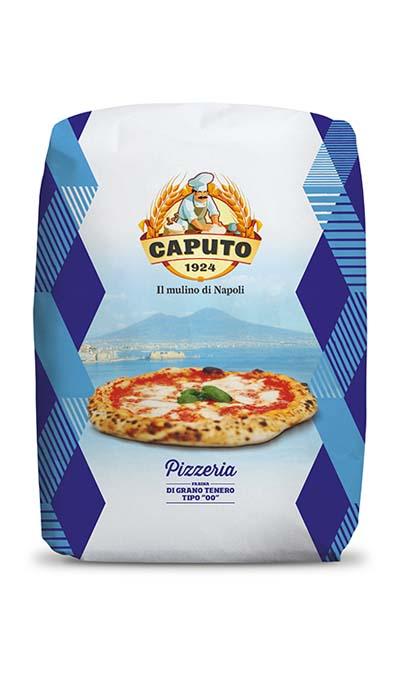
Yes. Caputo Blue is the pizzaiolo's nickname for the blue bag, and the flour inside is Caputo Pizzeria. It is a Tipo 00 with a strength of around W 260 to 280 and about 12.5% protein, balanced for easy handling and a soft, honeycombed crust. It is the reference flour for real Neapolitan pizza, built for high-temperature ovens and a leavening window from same-day up to about 24 hours. If your kitchen runs a direct dough and bakes hot and fast, this is the flour to build the menu on, which is why it is the one to buy the blue sack of first.
What is Caputo Red (Cuoco / Chef's Flour) for?
Caputo Red is the stronger flour, made for long fermentation. Sold as Cuoco or Chef's Flour, it is a Tipo 00 at around W 300 to 320, and the extra strength lets the dough hold a 24 to 72-hour cold ferment and higher hydration without turning slack. Reach for it when you cold-proof dough over two or three days, push hydration to 65 to 75%, or want more flavour and digestibility from a long, slow rise. The 25kg professional pack of Cuoco is sold as Saccorosso, so if you see that name it is the same strong flour in a trade sack.
What is Caputo Nuvola for?
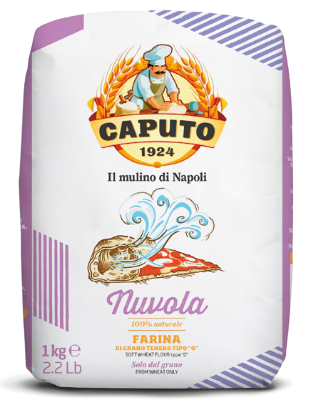
Nuvola is a Tipo 0 flour engineered for the airy, high-rim style people call canotto. The Tipo 0 grind and a strength of around W 260 to 280 give a light, well-aerated crumb and a pronounced puffed edge, and it takes 65 to 70% hydration comfortably over a ferment of a day or more. It suits an electric or gas oven around 430 to 480°C where you want maximum oven spring. Nuvola Super is the stronger version, around W 300 to 320, aimed at pan pizza, teglia, pinsa and biga or poolish doughs that need to hold more water and a longer rise.
What does "doppio zero" actually mean?
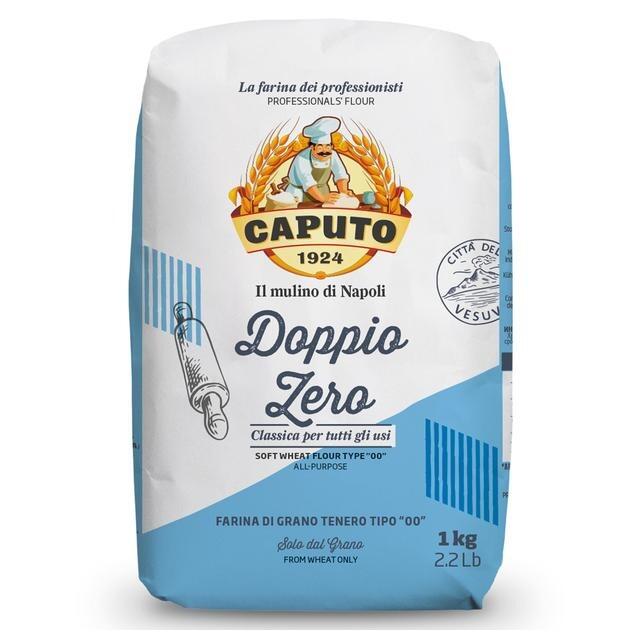
Doppio zero is the Italian for 00, and it describes how finely the flour is milled, not which Caputo product you are buying. A 00 grind is soft and fine, which is why it gives that smooth, elastic Neapolitan dough. Caputo Pizzeria and Caputo Cuoco are both 00 flours, while Nuvola is a 0. Caputo also sells a straightforward Classica or Doppio Zero flour, a medium-strength 00 at around W 220 to 240, best for same-day doughs and simpler methods. So "caputo doppio zero" can mean either the grind in general or that entry-level bag, which is worth knowing before you order.
Which Caputo flour for which oven?
The oven decides the flour as much as the recipe does. A wood-fired oven at 450 to 485°C cooks a Neapolitan in 60 to 90 seconds, so use Pizzeria or Cuoco at 58 to 65% hydration, which lets the rim set fast without scorching. An electric or gas oven around 300 to 480°C cooks slower, so a higher hydration with Nuvola keeps the crumb moist and the edge airy. In a home or deck oven at 250 to 300°C, a higher-hydration Nuvola on a baking steel gives a better result than a low-hydration dough that dries out over a longer bake. Match the water and the flour to the heat you actually have.
Which should a pizzeria buy by the sack?
Buy Pizzeria (the blue) by the 25kg sack as your core flour, because it carries the standard menu, handles well and keeps the cost per pizza predictable. Add a second flour only for a clear reason: Cuoco (the red) if you run long cold ferments, or Nuvola if a high-rim contemporary pizza is on the menu. There is no need to stock the whole range. Two flours cover most kitchens, one everyday and one specialist.
You can see the full Caputo flour range by the sack, and the Caputo Pizzeria 00 in 25kg sacks is the page to price first if you run a pizza-led menu. Ordering by the sack on a trade account is where the real saving on flour sits.
Common mistakes when choosing Caputo flour
01. Assuming blue and red are interchangeable. Pizzeria and Cuoco are milled to different strengths for different ferment times.
02. Cold-fermenting for three days on Pizzeria. For a 48 to 72-hour ferment, use Cuoco, which has the strength to hold it.
03. Switching to Nuvola without changing your method. The airy style wants higher hydration and a gentler hand on the dough.
04. Buying 1kg bags for a busy kitchen. A pizzeria should buy by the 25kg sack for cost and consistency.
05. Ignoring the oven. The right flour for a wood-fired oven is not the right one for a home electric.
Your Caputo flour checklist
✓Core flour chosen for your oven and ferment time, not the bag colour.
✓Pizzeria (blue) as the everyday flour for hot, fast bakes and shorter ferments.
✓Cuoco (red) added only if you run long cold ferments or higher hydration.
✓Nuvola added only for an airy, high-rim contemporary pizza.
✓Core flour bought by the 25kg sack on a trade account.
Related reading
Buy Caputo flour by the sack with A Di Maria & Son
Family-run Italian food & wine wholesaler since 1975, supplying pizzerias and Italian restaurants with fast nationwide delivery. We stock the Caputo range in trade sacks, with Caputo Pizzeria 00 in 25kg as the everyday flour most kitchens build on.
Apply for a trade account for pricing by the sack. Call 02476 680 514 or email contact@adimaria.co.uk with your oven type and how long you ferment, and we will point you to the right Caputo flour and the right pack for your volume.
FAQs
Is Caputo Blue the same as Caputo Pizzeria?
Yes. "Caputo Blue" is the nickname for the blue bag, and the flour inside is Caputo Pizzeria, the classic Tipo 00 for Neapolitan pizza.
What is the difference between Caputo Blue and Caputo Red?
Strength and ferment time. Blue (Pizzeria) is around W 260 to 280 for shorter ferments and hot, fast bakes. Red (Cuoco) is around W 300 to 320 for long, cold fermentation and higher hydration.
Is Caputo Nuvola a 00 flour?
No. Nuvola is a Tipo 0, milled a little less finely and built for an airy, high-rim contemporary pizza. Pizzeria and Cuoco are the 00 flours.
What does doppio zero mean?
Doppio zero is Italian for 00, which describes how finely the flour is milled rather than a single product. Several Caputo flours, including Pizzeria and Cuoco, are 00.
Which Caputo flour is best for a wood-fired oven?
Pizzeria or Cuoco. Both suit the high heat of a wood-fired oven at 58 to 65% hydration, with Cuoco chosen when you also want a long cold ferment.
Can I buy Caputo flour in 25kg sacks?
Yes. Caputo Pizzeria and the wider range come in 25kg trade sacks, which is how a pizzeria should buy its core flour for cost and consistency.

