
Grana Padano Whole Wheel vs 1kg Wedge: Which to Stock and Why
Stock a whole Grana Padano wheel if you grate all day and want the counter display, and a 1kg wedge if you use less or want flexibility and low waste. The whole wheel gives the lowest cost per kilo and the theatre of a cracked wheel front of house, but it only pays back if you finish it in condition. The wedge costs more per kilo, opens fresh, stores in a normal fridge and wastes almost nothing.
The decision turns on your grating volume, your storage, your cash and whether you display. Run the yield maths, not just the headline price per kilo, because a whole wheel that dries half-used is dearer in practice than a wedge you finish.
Quick overview: whole wheel or wedge
The two formats compared
The table below sets the whole wheel and the 1kg wedge side by side on the points that decide the buy.
What is Grana Padano, and how is it used in a kitchen?
Grana Padano is a hard, granular Italian cheese from the Po Valley, aged for months until it grates into fine, savoury flakes. Kitchens grate it over pasta and risotto, shave it onto salads and boards, finish a pizza with it and serve it as part of a cheese course. It is one of the most-used hard cheeses in professional kitchens because it is versatile and, wedge for wedge, usually better value than Parmigiano. One point to flag on the menu: Grana Padano is made with animal rennet, so it is not vegetarian, and a vegetarian hard-cheese alternative is the answer if a dish needs one.
Whole wheel or wedge: the cost per kilo
A whole wheel has the lowest cost per kilo, but the saving is real only if you finish it in condition. The bigger buy drops the per-kilo price and gives you a supply to grate from all day, which suits a busy Italian restaurant. The catch is that the moment you break into a wheel, the clock starts. If it would sit half-used and drying for weeks, a 1kg wedge that you open fresh and finish is cheaper in practice, even at a higher price per kilo. Work out how much you grate in a week before you commit to a wheel.
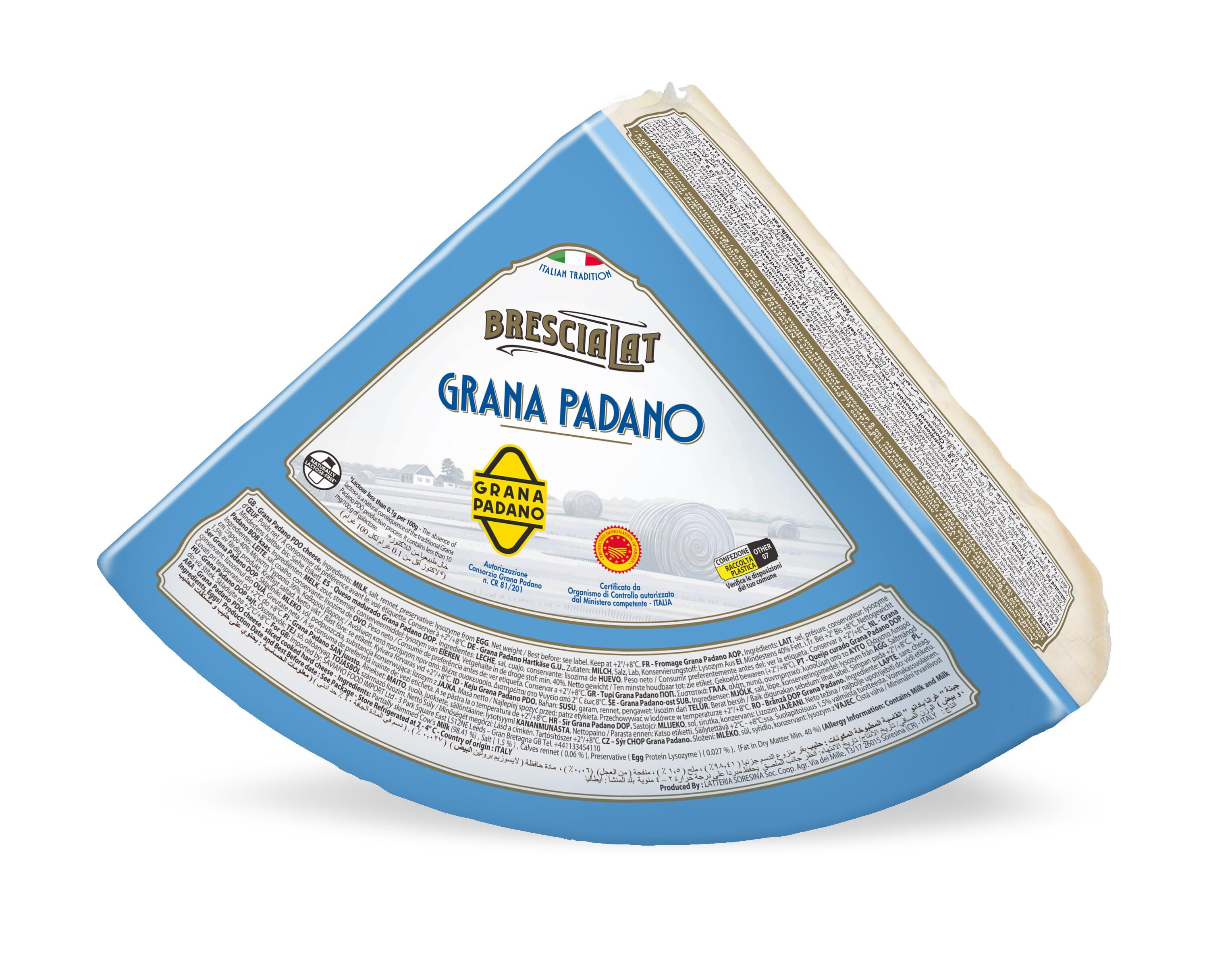
What about yield and the rind?
The usable yield of a whole wheel is lower than the gross weight, because the hard rind and the drying cut face are not going on the plate. That gap is worth building into your cost per kilo, so you compare like with like against a wedge. The rind is not waste, though. Grana Padano rinds hold a lot of flavour, so keep them and drop them into a stock, a minestrone or a slow sauce, then pull them out at the end. A kitchen that uses its rinds claws back part of the yield the display costs it.
How do you store a cut Grana Padano wheel?
Store a cut wheel cool and humid, with the cut face protected from the air. Once open, the exposed face dries and hardens, so wrap it in cloth or wax paper and then film, keep it somewhere cool and not too dry, and grate through it at a steady pace. A 1kg wedge is far simpler, wrapping tight and living in a normal fridge, which is part of why smaller kitchens prefer it. Whichever format you run, rotate it and keep the face covered between services.
Does a whole wheel earn its place front of house?
A whole or half wheel earns its place if the display drives sales and you have the volume to use it. A cracked wheel on the counter, or grating at the table from a hollowed half-wheel, sells the premium in a way a wedge behind the pass never will. That theatre is worth real money in the right room. It only works, though, if the grating volume keeps the wheel moving. Display without turnover just means an expensive cheese drying in view.
Which should you stock?
Stock a whole wheel if you grate all day and display it, and a 1kg wedge if you use less or want flexibility. A high-volume Italian restaurant that finishes dishes with Grana Padano all service, and wants the counter show, is the clear case for a Grana Padano whole wheel. A deli, a café, a sandwich counter or a smaller kitchen is better served by a 1kg Grana Padano wedge that opens fresh and wastes nothing. Some restaurants run both, a wheel for display and grating with a wedge as a clean backup. You can see the wider hard-cheese range on Wholesale Italian Cheeses.

Common mistakes when buying Grana Padano
01. Buying a wheel you cannot finish. A half-used, drying wheel is dearer than a wedge you use fully.
02. Comparing on gross price per kilo. Factor the rind and the drying face into the wheel's real cost.
03. Leaving the cut face open. An unprotected face hardens and wastes fast.
04. Throwing away the rinds. They flavour stocks and soups and claw back some yield.
05. Assuming Grana Padano is vegetarian. It is made with animal rennet, so check before a vegetarian dish.
Your Grana Padano buying checklist
✓Format matched to grating volume, storage and cash.
✓Whole wheel only where you finish it in condition and can display it.
✓1kg wedge for smaller or variable use and easy storage.
✓Rind and drying face built into the cost-per-kilo comparison.
✓Cut face wrapped and protected, stock rotated.
✓Rinds kept for stock and soups.
✓Vegetarian alternative on hand if the menu needs one.
Related reading
Open an Italian food trade account with A Di Maria & Son
Family-run Italian food & wine wholesaler since 1975, supplying Italian restaurants, delis and cafés with fast nationwide delivery. We supply Grana Padano as a whole wheel for high-volume grating and display, and as a 1kg wedge for smaller kitchens, in the format that matches your service.
Apply for a trade account to set your pricing and format for repeat ordering. Call 02476 680 514 or email contact@adimaria.co.uk with how much Grana Padano you grate in a week and whether you display it, and we will help you pick the format that costs least in practice.
FAQs
Is a whole Grana Padano wheel cheaper than wedges?
Per kilo, yes, but only if you finish it in condition. Once you factor the rind and the drying cut face, a wheel you cannot use fast enough can cost more than wedges you open fresh.
How much does a Grana Padano wheel weigh?
A whole wheel weighs around 32 to 38kg. That is a large cheese and a real cash and storage commitment, which is why it suits high-volume kitchens.
Is Grana Padano vegetarian?
No. Grana Padano is made with animal rennet, so it is not suitable for vegetarians. Use a vegetarian hard-cheese alternative where a dish needs one.
Can you use Grana Padano rind?
Yes. The rind holds a lot of flavour, so keep it and add it to a stock, minestrone or slow sauce, then remove it before serving.
How do you store a cut Grana Padano wheel?
Wrap the cut face in cloth or wax paper and then film, keep it cool and not too dry, and grate through it steadily. A 1kg wedge is simpler, wrapped tight in a normal fridge.

