
Wholesale Italian Cheese for Restaurants and Pizzerias: A Buyer's Guide
Buying wholesale Italian cheese for a restaurant or pizzeria comes down to three decisions. Which type each dish needs, which pack size matches your covers and storage, and how often you can reorder without waste. Get those right and your mozzarella melts the same every service, your grana grates to the same yield each week, and your cheese line stops quietly eating margin.
Most kitchens buy on price per kilo and regret it. A cheaper block that weeps water across a pizza, or a wheel that dries out before you finish it, costs more than the invoice shows. Buy for melt, moisture and yield first. Match the pack to your real weekly usage second. Price comes third, once the cheese actually does the job.
Quick overview: nine things to get right before you order
What Italian cheeses does a trade kitchen actually need?
A working kitchen needs cheeses from three families, each doing a different job. Fresh cheeses melt and plate. Semi-hard cheeses give flavour, grill well and fill the counter or board. Hard cheeses grate and finish. Stock one or two reliable lines in each family before you chase specialities, because those three cover most of a menu.
The table below sets out how each family earns its place, and what to watch when you order.
| Cheese family | What it does on the menu | What to watch |
|---|---|---|
| Fresh (fior di latte, buffalo mozzarella, stracciatella, burrata) | Melt on pizza, fresh starters, sharing plates | Moisture on the bake, short shelf life, unbroken cold chain |
| Semi-hard (provolone, scamorza, caciocavallo, taleggio) | Grilling, melting, sandwich counter, cheese boards | Ageing level changes melt and sharpness |
| Hard (Grana Padano, Parmigiano, pecorino) | Grating, finishing pasta and risotto, cheese course | Yield per kilo, rennet type, storage and drying |
Fresh cheeses: melt and plate
Fresh cheeses are the ones your customers see and taste most directly. On pizza that means fior di latte for everyday service and buffalo mozzarella for a premium line. On the cold side it means stracciatella and burrata for starters and sharing plates that sell at a strong margin. All of them are wet, short-dated and unforgiving if the cold chain breaks, so buy them to a turnover you can hit.
Semi-hard cheeses: flavour, grill and table
Semi-hard cheeses give you range beyond mozzarella. Provolone melts into baked dishes and sandwiches and comes mild (dolce) or sharp (piccante). Scamorza and caciocavallo grill and stretch. Taleggio brings a washed-rind depth to boards, pizza and risotto. Ageing is the thing to watch, because a younger cheese melts softer and tastes milder while an aged one sharpens and firms.
Hard cheeses: grate and finish
Hard cheeses are bought on maths, not habit. Grana Padano and Parmigiano finish pasta, risotto and pizza and anchor a cheese course, and what matters is grating yield and cost per cover. Pecorino adds a saltier, sheep's-milk note where a dish needs it. Buy the format your storage and volume can carry, and check the rennet if you serve a vegetarian menu, since traditional Parmigiano is not vegetarian while some Grana and hard-cheese alternatives are.
Which mozzarella is right for your pizza menu?
For most pizzerias, fior di latte is the right default. It is a fresh cow's-milk mozzarella with lower moisture than buffalo, so it melts and browns cleanly without flooding the base. Buffalo mozzarella is richer and wetter, which suits a premium pizza or a fresh starter but can leave a standard pizza soggy if you treat it as an everyday topping. Shredded mozzarella sits behind both as a labour-saver for high-volume kitchens.
Cost per pizza settles the argument more often than taste does. Fior di latte in a 1kg Napoli cut portions predictably across a service and holds its shape on the bake, which is why it carries most pizza menus. Keep buffalo as a named, higher-priced option, and reach for shredded mozzarella only where speed matters more than the fresh look and you have checked the moisture and coating. For fresh starters, stracciatella earns its own line rather than doubling up your mozzarella.
Browse the full range on Wholesale Italian Cheeses, and if you run a pizza-led menu the fior di latte page is the one to price first.


Mozzarella Shredded 100% 2kg
Fine matchstick cut for fast, even coverage in a high-volume kitchen. Run a test bake before you move a weekly order onto it.
£13.50Buy Mozzarella Shredded 100% 2kgHow do pack sizes change your cheese order?
Pack size decides whether cheese arrives fresh, rotates cleanly and costs what you expect per portion. A 1kg fior di latte cut suits a pizzeria that gets through mozzarella daily, because it opens, portions and finishes inside a service or two. A larger bulk pack only saves money if you actually use it before quality drops. The same logic runs across every cheese. The right pack is the one your covers empty before the date, not the biggest one on the price list.
Fresh cheese punishes overbuying fastest. Hard cheese is more forgiving but ties up cash and fridge space in a whole wheel. Shredded mozzarella in bulk bags cuts prep time but opens a moisture and coating question you need to answer on a test bake before you commit a weekly order to it.
Grana Padano whole wheel or wedge: which should you stock?
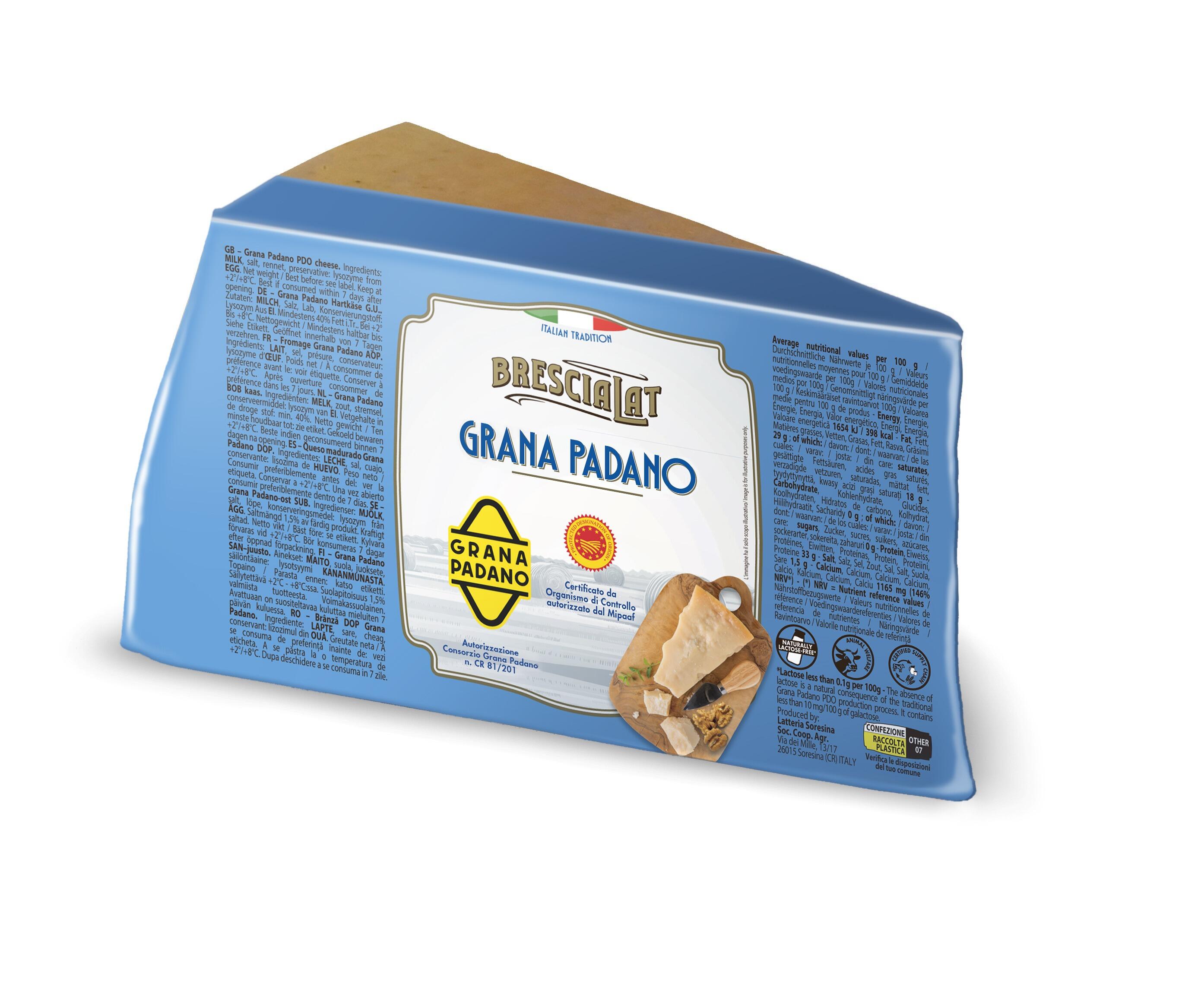
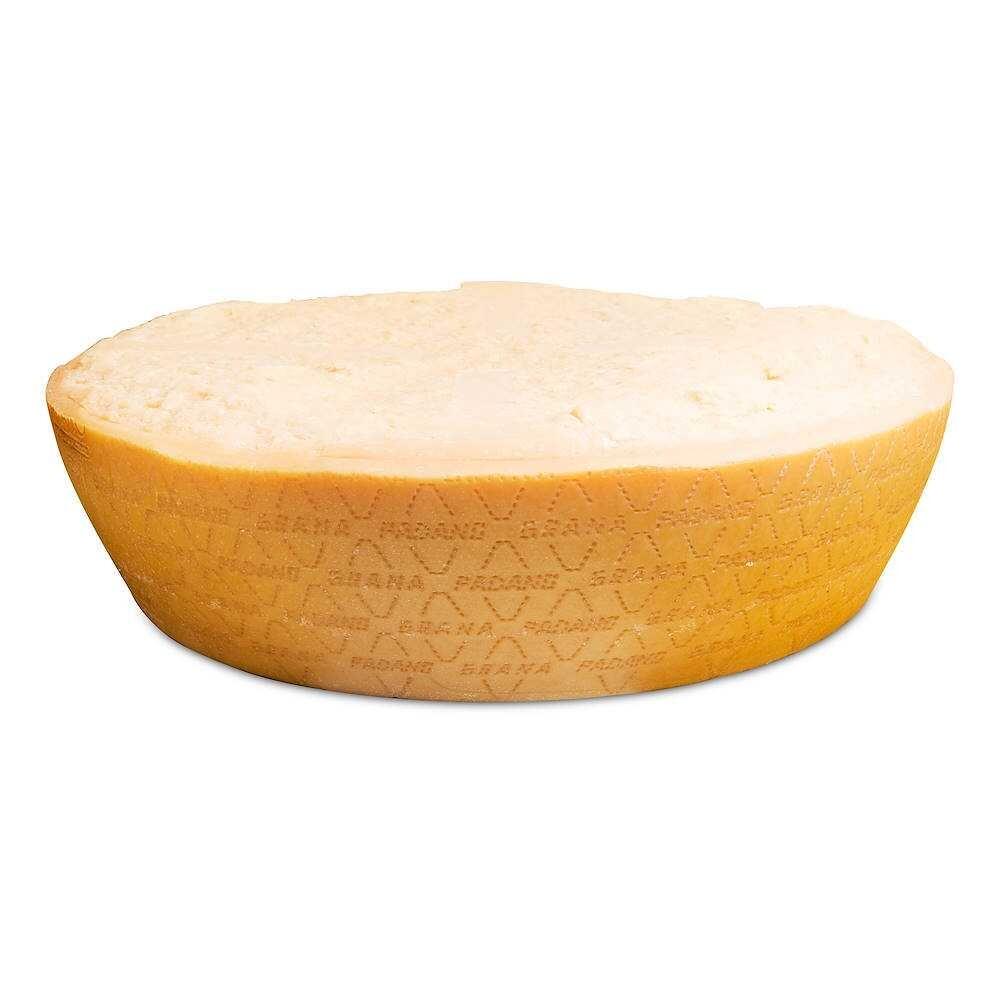
The answer depends on how fast you grate and how much storage you have. A Grana Padano whole wheel gives the best cost per kilo and a strong front-of-house display, and it makes sense for a busy Italian restaurant that finishes dishes with grated cheese all day. A 1kg wedge suits a smaller kitchen, a sandwich counter or a menu that uses less, because it opens fresh, stores easily and wastes nothing while you work through it.
Run the numbers on yield before you decide. A whole wheel only wins if you reach the last of it while it is still in good condition. If a wheel would sit half-used and drying for weeks, the wedge is cheaper in practice even though it looks dearer per kilo. Storage, grating volume and how the cheese sits on your pass all feed into that call.
Trade cheese baskets by business type
Different kitchens need different core cheeses. These starting baskets group the lines that tend to reorder together, so you can build an order around how you actually cook and serve.
Neapolitan pizzeria
Use case: high-volume pizza service with a fresh, authentic look.
Order focus: fior di latte in 1kg cuts as the base topping, provolone piccante for depth on speciality pizzas, Grana Padano for finishing, and stracciatella for a premium fresh-topped line.
Trade judgement: buy fior di latte to daily turnover and keep buffalo mozzarella as a named upsell rather than a default.
Italian restaurant or trattoria
Use case: pasta, risotto, grills and a cheese course.
Order focus: Grana Padano whole wheel or wedge for grating, provolone and scamorza for baked and grilled dishes, taleggio for risotto and boards, plus fior di latte where pizza is on the menu.
Trade judgement: size the grana format to your grating volume, and check rennet if the menu flags vegetarian dishes.
Deli or sandwich counter
Use case: counter display, sandwiches and retail sales.
Order focus: provolone dolce and piccante for slicing, a wedge of Grana Padano, fresh mozzarella for salads and caprese, and burrata or stracciatella as a weekend feature.
Trade judgement: favour wedges and smaller fresh packs that keep the counter looking fresh and cut end-of-day waste.
How should you plan your first serious cheese order?
Plan the first order around one week of real service, then adjust from what you actually use. Guessing high wastes fresh cheese and guessing low leaves you short mid-week, so treat the first order as a measured test rather than a stock-up.
What should you ask a cheese supplier before you commit?
Ask the questions that tell you whether reordering will be reliable, because a wholesale relationship lives or dies on the repeat, not the first delivery.
→What pack sizes does each cheese come in, and which suit my covers?
→How is chilled cheese delivered, and how far ahead do I order for the freshest date?
→What is the shelf life on arrival for the fresh lines?
→Which hard cheeses are made with vegetarian rennet?
→Can I set a standing order for my core cheeses and adjust the specials each week?
→What happens if a line is short or a delivery is delayed?
A supplier who answers those plainly is one you can build a menu around. Trade Account Benefits covers how pricing and repeat ordering work once you open an account.
Common mistakes when buying Italian cheese wholesale
01. Buying on price per kilo alone. A cheap cheese that weeps or dries costs more in waste and plate quality than it saves.
02. Treating buffalo mozzarella as an everyday pizza topping. It is wetter and richer, better kept as a premium line.
03. Overbuying fresh cheese for a discount. Fresh mozzarella and stracciatella punish slow turnover fast.
04. Buying a whole wheel you cannot finish. Half a drying wheel is dearer than a wedge you use fully.
05. Switching to shredded without a test bake. Moisture and anti-caking coatings change the melt.
06. Ignoring rennet on a vegetarian menu. Traditional Parmigiano is not vegetarian, and customers ask.
07. No fixed reorder day. Ad-hoc ordering means cheese arrives at uneven dates and rotates badly.
08. One cheese doing every job. Mozzarella cannot grate, and grana cannot melt on a pizza. Stock the family, not the single block.
How to review your cheese line each month
Review the cheese line the same way every month, because a short, repeatable check catches waste and drift before they cost you.
What sold well? Note the cheeses tied to your best-selling dishes and protect those lines in the order.
What was wasted? Flag anything that hit its date before you used it, and cut the pack size or frequency.
What caused ordering friction? Look for lines you ran short on or reordered off-cycle, and fix the cadence.
What should change next order? Adjust one or two pack sizes or quantities from what the month showed, not from a hunch.
Your Italian cheese buying checklist
✓Every cheese on the order maps to a dish and a job.
✓Fresh lines sized to daily turnover, hard lines to weekly grating yield.
✓Pack size matched to covers, so cheese finishes in date.
✓Whole wheels only where volume and storage justify them.
✓Vegetarian rennet confirmed where the menu needs it.
✓A fixed reorder day and a standing order for core lines.
✓A trade account in place for pack sizes and repeat pricing.
Related reading
Open an Italian food trade account with A Di Maria & Son
Family-run Italian food & wine wholesaler since 1975, supplying pizzerias, Italian restaurants, delis and sandwich counters with fast nationwide delivery. We hold the fresh, semi-hard and hard Italian cheeses a trade kitchen reorders week to week, in the pack sizes that match real service.
Apply for a trade account to set your pricing and pack sizes for repeat ordering. Call 02476 680 514 or email contact@adimaria.co.uk with your covers, storage and menu, and we will help you build a cheese order around how you actually cook.
FAQs
What is the most-used Italian cheese in pizzerias?
Fior di latte. It is a fresh cow's-milk mozzarella with the right moisture and melt for everyday pizza, which is why it carries most menus ahead of buffalo or shredded.
Is buffalo mozzarella better than fior di latte for pizza?
Not for standard service. Buffalo is richer and wetter, so it suits a premium pizza or a fresh starter. For everyday pizza, fior di latte melts and browns more cleanly.
How should I store fresh mozzarella in a busy kitchen?
Keep it chilled in its own liquid and use it in date order. Fresh mozzarella is short-dated, so buy it to a turnover you can hit rather than in bulk.
Grana Padano or Parmigiano for grating?
Grana Padano usually gives better value per cover, while Parmigiano is sharper and firmer. If you serve vegetarian dishes, check the rennet, since traditional Parmigiano is not vegetarian.
Can I buy shredded mozzarella wholesale?
Yes, and it saves prep time in a high-volume kitchen. Run a test bake first to check the moisture and any anti-caking coating before you move a weekly order onto it.
Do you deliver Italian cheese across the UK?
Yes. We deliver chilled Italian cheese with fast nationwide delivery, so fresh lines arrive on a good date and ready to rotate.
Do I need a trade account to order?
For trade pricing and the right wholesale pack sizes, yes. A trade account fixes your pricing and pack formats for repeat ordering rather than one-off buys.
Tell us your business type, weekly covers, storage capacity and the dishes your cheese has to cover, and we will help you build a practical Italian cheese order around real demand. Start narrow, prove demand, then expand from evidence.

